
Congratulations on becoming an aircraft owner! Whether you just purchased your first plane or you're approaching your first annual inspection as a new owner, the process can feel a bit mysterious. What exactly happens during an annual? How long does it take? What should you prepare? And most importantly—what can you do to make the process as smooth as possible?
Let's walk through everything you need to know about your first annual inspection.
What Is an Annual Inspection?
An annual inspection is a comprehensive examination of your aircraft's airworthiness, required by the FAA every 12 calendar months for all certified aircraft. Unlike routine maintenance or 100-hour inspections (required for aircraft used for hire), an annual inspection must be performed by an Airframe and Powerplant (A&P) mechanic with Inspection Authorization (IA).
The inspection follows specific FAA regulations and manufacturer guidelines, examining everything from engine condition to control surface movement and recurring maintenance items. Think of it as a thorough physical exam for your aircraft—the mechanic is looking for anything that could affect safe operation, from worn components to corrosion to improper previous repairs.
The goal isn't just to check boxes on a form. It's to ensure your aircraft meets all applicable airworthiness directives, is mechanically sound, and is safe to fly for another year.
What Actually Gets Inspected?
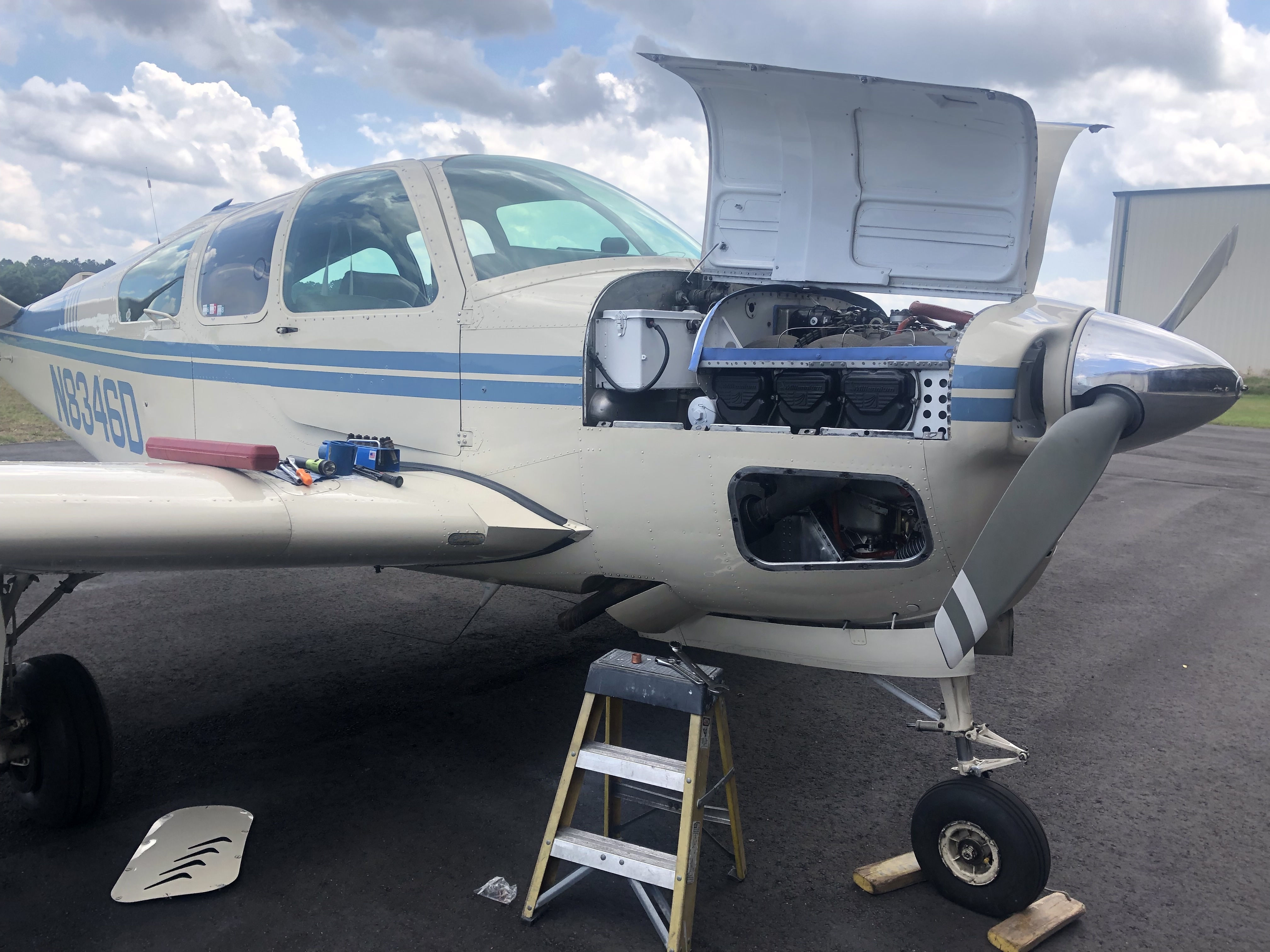
Your mechanic will perform a detailed examination of virtually every system and component on your aircraft. Here's what that includes:
Airframe and Structure: The mechanic inspects the fuselage, wings, tail surfaces, landing gear, and all control surfaces for cracks, corrosion, proper rigging, and structural integrity. They'll look in areas you rarely see—inside wing roots, under floor panels, and behind interior panels.
Engine and Propeller: The engine receives particular attention. Your mechanic will examine cylinders (including a compression check), magnetos, spark plugs, fuel and oil systems, exhaust system, and engine mounts. The propeller is checked for damage, proper tracking, and security.
Systems and Avionics: All aircraft systems are tested for proper operation—flight controls, braking system, electrical system, fuel system, and avionics. This work varies greatly depending on what specific items are installed on your aircraft.
Documentation Review: This is where many first-time owners are surprised. A significant portion of the annual involves reviewing your aircraft maintenance records. Your mechanic needs to verify that all required airworthiness directives have been complied with, recurring ADs are current, and all previous maintenance was properly documented. They also need to verifty if any new ADs or service bulletins apply to your aircraft.
Preparing for Your Annual: The Logbook Challenge
Here's where many new owners hit their first obstacle: logbook preparation. Your mechanic needs to review your aircraft's maintenance history to verify AD compliance, understand previous work, and ensure everything is properly documented. Disorganized logbooks can cost you significant time and money.
If your aircraft has 20, 30, or 40 years of logbook entries, that's a lot of pages to review. And if those entries are handwritten, scattered across multiple books, or documented inconsistently, it becomes time-consuming for your mechanic—time that you're paying for.
This is where intelligent logbook management makes a real difference. Before your annual, you can use a service like PlaneDNA to digitize your maintenance records and generate a comprehensive report showing:
- All applicable airworthiness directives with compliance status
- Recent maintenance history
- Any recurring ADs with next-due dates
- Damage history (if any)

Instead of handing your mechanic a stack of logbooks and hoping they can find everything, you can provide organized documentation that speeds up the review process. This not only saves time (and therefore money), it also reduces the chance that something important gets missed.
You can start with PlaneDNA's free tier to upload your most recent logbook entries and see how much clearer your aircraft's maintenance picture becomes.
Common Items Found During First Annuals
Don't be surprised if your mechanic finds items that need attention. This is normal and actually a good thing—it means the inspection is doing its job. Common findings on first annuals include:
Maintenance Items: Worn brake pads, old spark plugs, deteriorating engine hoses, expired emergency equipment (ELT battery, fire extinguisher), or tires near their service limits.
Airworthiness Directives: Sometimes previous owners completed required ADs but didn't document them clearly in the logbooks. Other times, a recurring AD might be coming due. Your mechanic will identify these during the inspection.
Minor Corrosion: Particularly if the aircraft has been tied down outdoors or operated in humid environments, surface corrosion isn't uncommon. Most is treatable, but it needs to be addressed.
Documentation Issues: Missing logbook entries, unclear signatures, or incomplete AD compliance documentation. These aren't airworthiness issues themselves, but they need to be sorted out.
What Happens If Issues Are Found?
Your mechanic will provide you with a "squawk list" of items that need attention before they can sign off the annual. Some items are required by regulation (like overdue ADs), while others are recommendations for safety or reliability.
You'll need to decide which items to address immediately and which can be deferred (if legally permissible). Your mechanic can help you prioritize based on safety, urgency, and budget.
Once all required items are completed, your mechanic signs off the annual inspection in your logbooks, and your aircraft is legal to fly for another 12 months.
After the Annual: Staying Organized
Once your annual is complete, this is the perfect time to establish good record-keeping habits. Make sure:
- All work is properly documented in your logbooks with clear entries, mechanic signatures, and certificate numbers
- You understand which ADs are recurring and when they're next due
- You have copies of all documentation (consider digitizing if you haven't already)
- You know what maintenance items are approaching (hoses, tires, battery, etc.)
Aircraft annual inspection preparation becomes much easier in subsequent years when you have organized, searchable maintenance records. Being able to quickly answer questions like "When was the last oil change?" or "Has AD 2020-15-03 been complied with?" saves time and reduces stress.
Making Future Annuals Easier
Your first annual is a learning experience. You'll discover what your mechanic expects, how thorough they are, and what your aircraft typically needs. Use this knowledge to prepare better for future annuals:
- Schedule early (some mechanics book 6-9 months out)
- Review your logbooks before the appointment to identify any questions
- Address minor maintenance items throughout the year rather than discovering everything at annual time
- Keep detailed records of all maintenance, even minor work
- Stay on top of recurring ADs so they don't sneak up on you
The more organized your aircraft maintenance records are, the smoother each annual becomes.
Your First Annual Doesn't Have to Be Stressful
Yes, annual inspections are comprehensive. Yes, they can uncover unexpected issues. But they're also an essential part of safe aircraft ownership. With proper preparation—particularly having your logbooks organized and your AD compliance documented—your first annual can be a straightforward process rather than an anxious experience.
Ready to prepare for your annual inspection? Visit planedna.com to see how organized maintenance records can simplify your annual inspection preparation.
Have questions about your upcoming annual inspection? While we can't provide mechanical advice, we can help you organize your logbooks and AD compliance documentation. Get started at planedna.com.